The Benefits of Building Blocks: Why They're Essential for Child Development
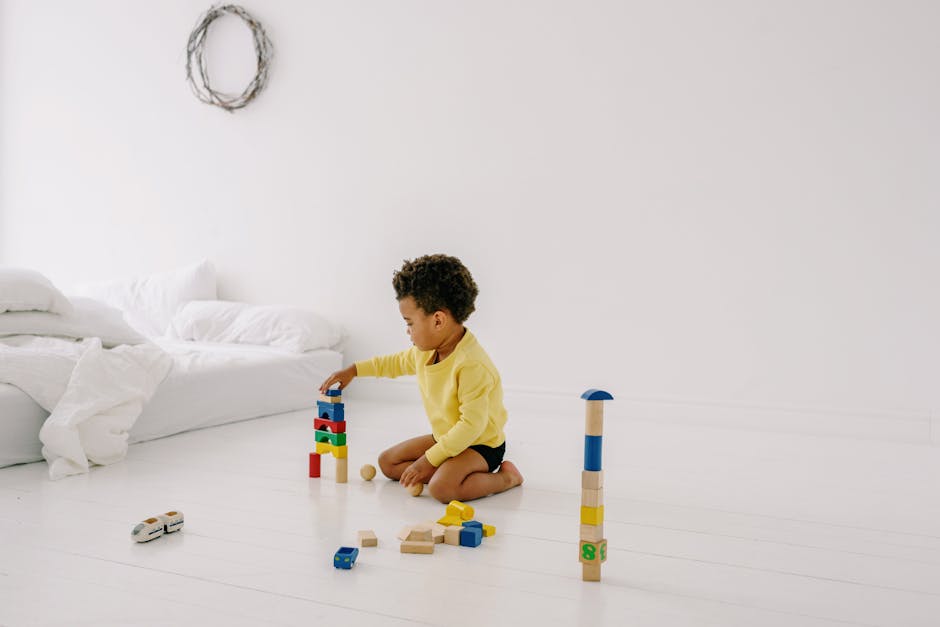
Building blocks might seem like simple toys, but they're actually powerful tools for child development. For generations, children have learned through stacking, balancing, and creating with blocks, and modern research confirms their educational value.
Spatial Reasoning is one of the most important skills blocks develop. As children arrange blocks in different configurations, they learn how objects relate to each other in space. This foundation supports later learning in maths, engineering, and science.
Fine Motor Skills improve as children grasp, place, and balance blocks. The precision required to stack blocks without toppling them strengthens hand-eye coordination and the small muscles in fingers and hands—skills essential for writing and other detailed tasks.
Problem-Solving Abilities emerge naturally during block play. Children experiment, fail, and try again. They learn that certain structures are stable whilst others collapse, developing cause-and-effect understanding and persistence through challenge.
Creativity and Imagination flourish with open-ended play. Unlike toys with one specific purpose, blocks can become castles, bridges, towers, or abstract creations limited only by imagination. This type of unstructured play is increasingly rare but crucial for creative development.
Social Skills develop when children build together. They negotiate whose idea to follow, take turns, and cooperate towards shared goals. Building alongside others teaches collaboration and communication.
Mathematical Concepts emerge organically through block play. Children discover symmetry, patterns, balance, and proportion without formal instruction. They learn about size relationships and spatial dimensions intuitively.
The beauty of blocks is their simplicity. They require no batteries, screens, or complicated instructions. A child can pick them up and start playing immediately. Wooden blocks, plastic blocks, foam blocks—the type matters less than the opportunity to build.
Experts recommend having a variety of block sizes and shapes available. Starting with basic wooden blocks and gradually adding specialised sets keeps play interesting as children develop. Even simple cardboard blocks work well for younger children.
Investing in quality blocks that will last through multiple children or years of play offers excellent value. They're toys that grow with your child, offering appropriate challenges at different developmental stages.